


Converting & Forming
Where Printed Sheets Become Packaging.
Printing puts your design on the board. Converting gives it structure. Our converting and forming operations cut, crease, fold, glue, and press every printed sheet into a finished package that is ready to fill on arrival.
One Facility. Every Step From Sheet to Product.
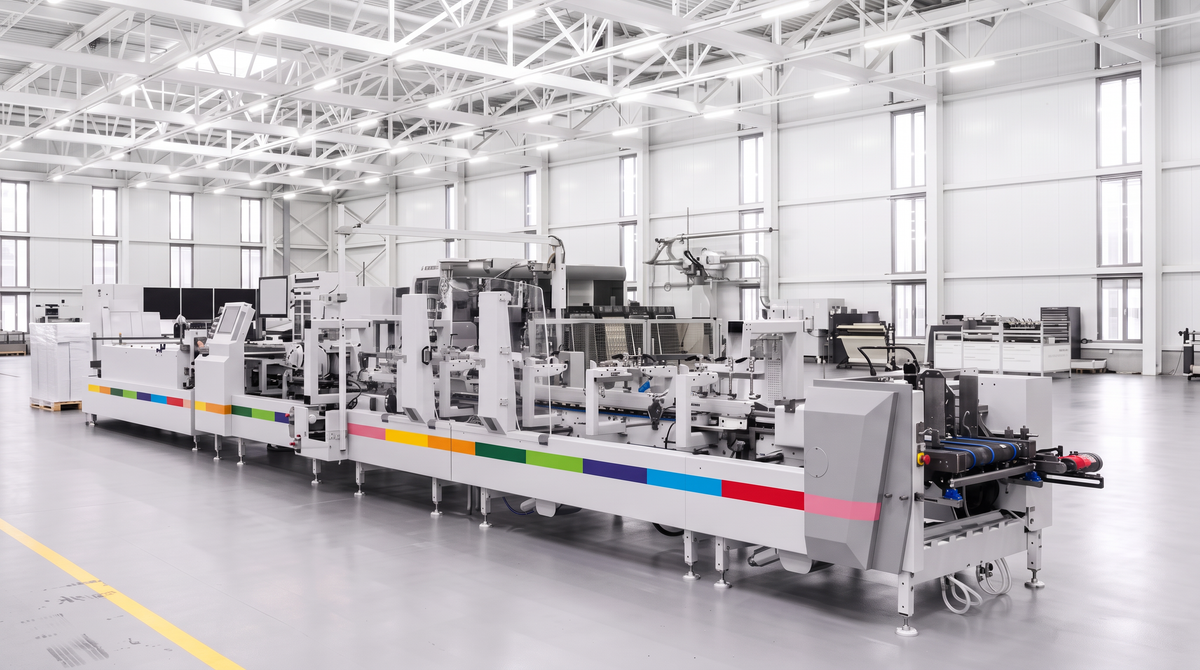
Printing is where your design goes on the board. Converting is where it becomes packaging. The moment a job comes off the press, the printed sheets move to our converting floor, where each one is cut to its finished outline, creased along every fold line, and windowed if the package calls for a clear view of the product. The result is a stack of clean, accurate blanks ready to take shape.
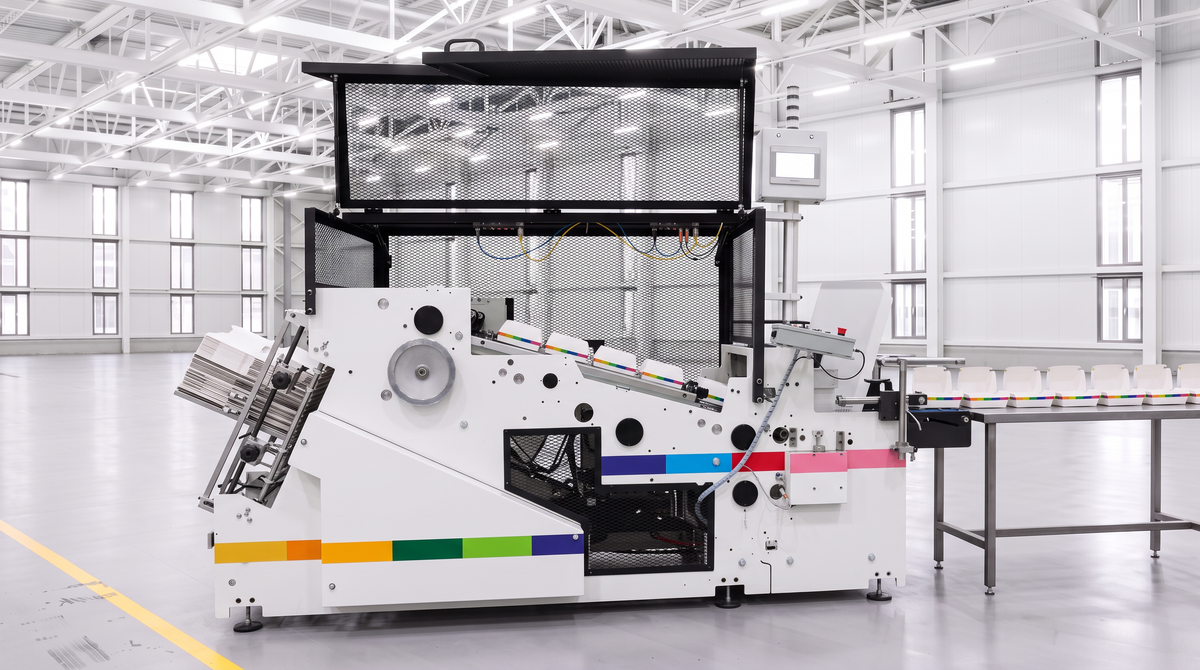
From there, every blank is headed one of two places. Cartons, sleeves, and boxes with square corners run through the folder/gluer, which folds them along their creases and glues them so they ship flat and open in seconds at the point of use. Clamshells, boats, and trays go to the forming machines, where the printed paperboard is pressed into a rigid three-dimensional shape with smooth corners, typically on grease-resistant barrier board. Both paths start with the same paperboard and finish with the same inspection, whether the run is a few thousand or a few hundred thousand.
Because printing, converting, and forming all happen under one roof in Mora, Minnesota, your job never leaves the building from paperboard rolls to packed cases. One team owns the quality, one schedule controls the timeline, and the package that arrives at your dock is ready to fill the day it lands.
Information on Converting & Forming
What does converting mean in packaging?
What does converting mean in packaging?
Converting is everything that happens to a printed sheet after it leaves the press. The sheet is cut to its outline, creased where it will later fold, windowed if the package needs a clear view of the product, and then either folded and glued or formed into its final shape. Printing puts the design on the board; converting is what turns that board into a package that can be filled, closed, and shipped. At OlymPak, every one of those steps happens in our Mora, Minnesota facility, so a job moves from press to finished package without leaving the building, under one set of eyes and one quality standard.
What is the difference between folding and forming?
What is the difference between folding and forming?
The structure of the package decides the path. Cartons, sleeves, and boxes with square corners and flat panels are folded along their scored creases and glued on the folder/gluer, which produces a package that ships flat and pops open at the point of use. Trays, clamshells, and lidded containers that need smooth corners and a rigid, seamless wall go to the forming machines, where the blank is pressed into its final shape in one step. Both paths start with the same printed white paperboard and the same cutting and creasing operations, so the choice comes down to how the package will be handled and what it needs to hold. Our team reviews that with you during design, so the structure is matched to the right process before the first sheet is printed.
What is forming, and which packages are made that way?
What is forming, and which packages are made that way?
Forming is the converting process that gives flat printed paperboard a three-dimensional shape in a single pressing step. Instead of being folded along scored creases and glued, the blank is placed in a forming machine and pressed into a tray, clamshell, or lidded container with smooth corners and a rigid wall. Pizza clamshells, food trays, and serving containers are the products that take this path, because they need to hold their shape under weight without a glue seam. Formed packaging is typically produced on grease-resistant barrier boards, so the printed paperboard stands up to oils, cheese, and sauces without staining or softening. Containers leave the forming machines ready to fill, so there is no assembly step before the food goes in.
Your Custom Packaging Journey
From concept to delivery, we make creating custom packaging simple, collaborative, and stress-free.

Discover & Consult
Tell Us About Your Project
Share your packaging goals, product specifications, artwork, and timeline. Our team will recommend the best materials, sizes, and printing options for your application.

Design & Proof
Free Mockups & Proof Approval
Bring your vision to life before production begins. Our team creates complimentary digital mockups and production proofs so you can visualize your custom packaging, request revisions, and approve every detail with confidence.

Production
Precision Manufacturing
Using high-quality printing and converting equipment, we manufacture your custom packaging to meet your specifications while maintaining strict quality standards.

Delivery
Quality Checked & Delivered
Every order is inspected before shipping to ensure consistent quality and arrives ready to support your brand and your customers.